
Passenger vehicle sales are expected to experience muted growth in the current financial year.

India's economic growth surged to 20.1 per cent in the April-June quarter of this fiscal, helped by a low base of the year-ago period, despite a devastating second wave of COVID-19. The gross domestic product (GDP) had contracted by 24.4 per cent in the corresponding April-June quarter of 2020-21, according to data released by the National Statistical Office (NSO) on Tuesday. The government had imposed a nationwide lockdown at the onset of the COVID-19 pandemic last year.

India's corporate sector is likely to report a slowdown in revenue growth and earnings for the July-September 2023 period (Q2FY24), according to earnings estimates by brokerages, after the country's top listed companies posted higher than expected profits for the first quarter. The combined net profit of Nifty50 companies, based on brokerage estimates, is expected to have grown by 19.6 per cent year-on-year (Y-o-Y) to Rs 1.75 trillion in Q2FY24 - a sharp deceleration from 37.6 per cent Y-o-Y growth in the combined earnings of index companies in the April-June 2023 period. According to estimates, the combined earnings in the second quarter would be down 8.8 per cent on a quarter-on-quarter (Q-o-Q) basis and the lowest in the past three quarters.

The recent surge in crude oil prices could shave off the gains made by India Inc in profit margins in the past few quarters. Worse, it comes at a time when consumer demand in the country is slipping and major global economies are witnessing a slowdown. A back-of-the-envelope calculation suggests that the margin expansion accounted for three-fourths of the rise in the listed firms' operating profit between the April-June quarter (Q1) of FY23 and Q1FY24, and only a quarter of profits gains came from revenue growth.

Stocks of alcoholic beverage makers have corrected over the last few trading sessions on worries that taxes, competition and costs will hurt sales and profitability. The recent trigger for the decline is Karnataka, which accounts for 15 per cent of overall liquor consumption, increasing duties. The state increased by 20 per cent the additional excise duty on Indian-made foreign liquor (IMFL) on all slabs.

The stock of LTIMindtree finished at Rs 5,001 a piece on Monday, which means it is down about 5 per cent from its all-time high as its June quarter results for the 2023-24 financial year (Q1FY24) missed estimates. A cautious note by the management, coupled with the fact that it will miss its double digit revenue growth target for FY24 weighed on the stock price. The company delivered revenues of just over a billion dollars in the quarter with constant currency growth of 0.1 per cent.

Deputy Governor Michael Patra warned about the spillover effects of food inflation.

Notwithstanding the fact that the country's pharmaceutical (pharma) pricing regulator has allowed a 12 per cent price increase for medicines listed under the National List of Essential Medicines (NLEM) in 2023, analysts and industry insiders predict that the overall domestic pharma industry will only witness a price hike of 5-6 per cent. This is attributed to higher competitive intensity in the market. Krishnakumar V, executive director and chief operating officer (CEO) of Eris Lifesciences, a domestic-focused pharma company, noted that the NLEM segment experienced growth suppression of around 150 basis points due to price reductions during the January to July period this year.
IT services major LTIMindtree reported a net profit of Rs 1,100 crore for the fourth quarter of financial year 2023-24 (FY24), down 1.2 per cent year-on-year (Y-o-Y) from Rs 1,141 crore in the same quarter last financial year. Revenue grew 2.3 per cent Y-o-Y for the fourth quarter to Rs 8,892.9 crore. Sequentially, revenue was down 1.4 per cent.

Shares of Tata Consultancy Services (TCS), the country's largest IT services provider, continue to remain under pressure, hitting a new eight-month low of Rs 3,624.90 intraday on Tuesday before closing at Rs 3,631, down 1.19 per cent. In the past two trading sessions, the stock price has declined 4 per cent on fears of a slowing US economy.

NMDC, the country's largest iron-ore miner, posted a consolidated revenue in the January-March quarter of FY24. This was in line with estimates at Rs 6,500 crore, which was up 11 per cent year-on-year (Y-o-Y), and a 20 per cent quarter-on-quarter (Q-o-Q) rise on the back of realisations. Iron-ore production was 13.3 million tonnes (down 6 per cent and up 8 per cent Q-o-Q), while the sales stood at 12.5 MT (up 1 per cent Y-o-Y and up 10 per cent Q-o-Q).

The Reserve Bank India's (RBI's) decision to ban the onboarding of new accounts on the "bob World" mobile digital platform led to a selloff in the Bank of Baroda (BoB) stock. The stock of the public sector bank dropped by around 3 per cent. The central bank cited "material supervisory concerns"; news reports claimed mobile numbers were randomly linked to accounts to purportedly inflate registrations on bob World.

Balance-level delinquencies in the credit card segment saw a 17 basis points (bps) year-on-year (Y-o-Y) rise in the quarter ending June 2024 (Q1FY25). In all other credit segments, including personal loans, delinquencies declined even as retail credit growth moderated, consequent to banks tightening the supply of credit to the unsecured segments, a report by TransUnion CIBIL said on Monday. Data shows that balance-level delinquencies, measured in terms of 90 days or more past due, in the credit card segment stood at 1.8 per cent in Q1FY25- highest among all other credit segments.

After several years of consolidation and price weakness, the cement industry may be moving towards a more stable phase. Pan-Indian, average cement prices have risen through the past three months consecutively.

Listed housing finance companies (HFCs), as a group, posted a 3.7 per cent drop in second-quarter (Q2) profit year-on-year (YoY) to Rs 5,830 crore and 19 per cent sequentially on rise in interest expenses and uptick in provisions and write-offs. Operating income rose 13.7 per cent YoY to Rs 54,086 crore in Q2 of 2022-23 (FY23). Sequentially, income was up 62.3 per cent, from Rs 33,331 crore in the first quarter (Q1) of 2021-22 (FY22).

The outcome of the Union Budget, quarterly earnings from corporates and global trends are the major factors to drive stock market sentiments this week, analysts said. Besides, the trading activity of foreign investors, the rupee-dollar trend and the movement of global oil benchmark Brent crude are also crucial aspects to watch out for.

Bharti Airtel has quietly narrowed its adjusted gross revenue (AGR) market share gap with Reliance Jio, the country's largest player in the game, in the last three years. Despite Jio's aggressive entry into 4G and now into 5G, Airtel's gap with Jio, which was 6.4 percentage points in Q1 of FY21 and went up to 7.2 percentage points in Q1 of FY22, has fallen to only 4.4 percentage points in Q1 of FY24. Currently, Reliance Jio's AGR market share is 41.6 per cent while Airtel's is at 37.2 per cent.

Iron ore mining major NMDC's results for the April-June quarter (Q1) of FY25 were better than estimates. Weak volumes were balanced off by higher realisations, better average selling price (ASP) and lower royalties which boosted bottomline. The revenue was in line with estimates at Rs 5,400 crore, flat year-on-year (Y-o-Y) and down 17 per cent quarter-on-quarter (Q-o-Q).

After disappointing guidances in the first quarter (Apr-Jun) of the 2023-24 financial year (Q1FY24) and valuation downgrades, the Indian IT sector could see some positive repricing as the bad news for IT maybe easing in Q2FY24. A key negative factor was weaker demand from the US financial sector and from North America in general. The latest GDP (gross domestic product) estimates and sector-specific news suggest that the demand situation may not be quite so bad with a gradual recovery in tech spending in Q2.

While TCS cited evolving business needs and future readiness as reasons, industry experts say the action is a cost-cutting measure aimed at improving operating margins that have remained below the firm's aspirational range despite multiple efforts.

Metal and mining companies, such as Tata Steel, JSW Steel, Hindalco, and Coal India, have been among the top-performing sectors on the bourses in recent months. The S&P BSE Metal Index is up 13 per cent in the past three months, rallying 29 per cent in the past year, outperforming the broader market. For comparison, the benchmark S&P BSE Sensex has only seen a 1.7 per cent increase in the past three months, with a 15 per cent gain since the end of September last year.

Indian IT services sector's revenue growth will slow down to 3 per cent in the current fiscal from 9.2 per cent in the previous financial year, a domestic ratings company said on Tuesday. Icra Ratings said the profitability will also take a beating in this financial year and the operating profit margin will narrow by up to 1 percentage point to 20-21 per cent. The topline growth will come down to 3-5 per cent in FY24 from the 9.2 per cent posted in FY23, the agency said, attributing the slowdown to softening demand.

Steel companies are witnessing margin pressures in Q2FY25 and this may persist until China sees growth recovery.

Mid-sized IT firms have stepped up hiring in the current fiscal year, adding more than half as many employees in the first quarter of FY19 as compared to the whole of the previous financial year. This momentum is likely to continue for the rest of 2018-19 (FY19) as well.

Auto industry volumes have grown by 2.5 per cent overall, led by domestic sales of three-wheelers, two-wheelers and passenger vehicles (PVs) in the first quarter of this financial year. Analysts predict an 18 per cent growth in revenues for automotive original equipment manufacturers (OEMs) and profit growth of 69 per cent year-on-year (YoY). However, on a sequential basis, a decline in revenues as well as earnings before interest, taxes, depreciation, and amortisation (Ebitda) margins is expected.

'Companies are coming to the campuses, and we have companies booking their slots for the placement season, but the overall number of companies signing is low, and the hiring numbers are also lower.'
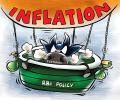
The Reserve Bank on Wednesday lowered the inflation projection for the current fiscal to 4 per cent from 4.2 per cent earlier, taking into account good agricultural output and falling crude prices.

Except for Westlife Foodworld (Westlife), a weak 2022-23 (FY23) January-March (fourth quarter, or Q4) quarter performance and a muted near-term outlook led to a downward revision of earnings estimates for quick-service restaurant (QSR) players. Brokerages have slashed estimates by as much as 10 per cent for 2023-24 (FY24) and 2024-25 (FY25). The downward revisions have weighed on the performance of listed players, who have underperformed the market with low single-digit returns over the past month.

'MIB which is a part of retail, will grow in the range of 20 per cent.'

The Indian cement industry is hopeful of greener pastures after a long period of stress led by pricing pressures and other factors. The second half of FY25 is expected to bring respite due to price hikes, cost benefits and higher volumes, said analysts. The optimistic momentum also makes cement stocks attractive, analysts added, advising to buy dips following a period of bearish sentiment in these stocks.

MMFS is looking at a compounded annual growth rate (CAGR) of 18 per cent in assets under management (AUM) during FY23 to FY26 on the back of the strong recovery. The company has initiated risk-mitigating initiatives, including diversification into non-vehicle loans, building digital capacity and re-classification of customer profiles into affluent and mass-affluent in semi-urban segments to better target marketing.
Sources close to the development told Business Standard the company was exploring different ways to save on its employee costs and had laid off a few employees on "performance" grounds. "We will see a similar development for the next few months. "The company is fine-tuning its hiring policies and implement rigourous measures to look into employee performance," a source said.

Since its results for the first quarter of the 2023-24 financial year (Q1FY24) earlier this month, the stock of auto component major Bharat Forge is up nearly 15 per cent and hit its all-time high in the process. The recent gains have extended the returns over the last three months to over 34 per cent. After a strong Q1 performance which beat expectations, brokerages had revised their earnings estimates upwards to factor in the improved outlook.

Reserve Bank on Wednesday cut India's growth forecast to 6.5 per cent from 6.7 per cent estimated earlier for the current financial year on account of impact of global trade and policy uncertainties. Prospects of agriculture sector remain bright on the back of healthy reservoir levels and robust crop production in 2025-26, RBI Governor Sanjay Malhotra said while unveiling the outcome of the first bi-monthly Monetary Policy Committee meeting for the current financial year.

Equity markets will take cues from the US tariff related developments, global trends and trading activity of foreign investors this week, analysts said.

4.5 million weddings are expected across India.

Cement companies posted mixed figures for the first quarter of the 2023-24 financial year (Q1FY24). Volume growth was robust at 17 per cent year-on-year (Y-o-Y) - on an aggregate basis - for 15 cement companies, with revenue growth at 15 per cent. Aggregate earnings before interest, taxes, depreciation, and amortisation (Ebitda) were up 8.8 per cent Y-o-Y and 1.2 per cent quarter-on-quarter (Q-o-Q).
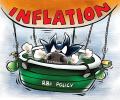
Reserve Bank on Wednesday said it expects retail inflation at 5.2 per cent in the first half of the current fiscal and revised downwards the target to 5 per cent for the quarter ended March. While headline inflation at 5 per cent in Feb 2021 remains within the tolerance band, some underline constituents are testing the upper tolerance level. Going forward, the food inflation trajectory will critically depend on the temporal and special progress of southwest monsoon in the 2021 season, RBI Governor Shaktikanta Das said on Wednesday while announcing the first monetary policy for the current fiscal. Reserve Bank of India (RBI) has kept the key repo rate unchanged at 4 per cent to support growth in the current situation.

Reflecting strong momentum in business, commercial banks, including one public sector lender, reported a year-on-year (YoY) growth in advances. This was higher than or around the banking sector trend in the first quarter ended June 2023. Bank of Maharashtra said its loans expanded by 25 per cent YoY to Rs 1.75 trillion. This pace was much higher than the banking system's 15.4 per cent growth till June 16, 2023, according to Reserve Bank of India (RBI) data.

However, the SBI report said it will take almost seven-quarters from Q4 FY21 to reach the pre-pandemic level in nominal terms and there will be a permanent output loss of around 9 per cent of GDP.
